Varnolt Mobility CellsProduct passport
Fictional product demonstration. Brand, image, specifications and source documents are invented. The page shows the public data points an EU battery passport requires for an LMT battery (Regulation (EU) 2023/1542, Annex XIII). Not a published or certified passport.
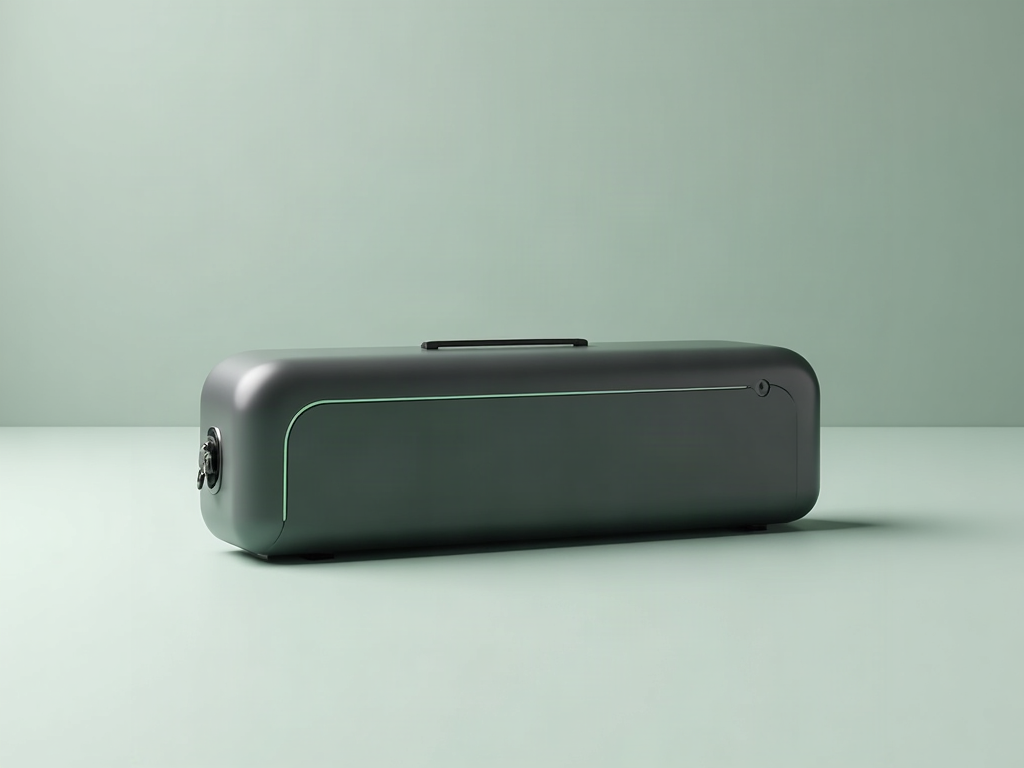
FrameCell 504 e-bike battery
Varnolt · VN-FC36-504
Frame-mounted lithium-ion battery for e-bikes: 36 V, 14.0 Ah, 504 Wh. Thirty 21700 NMC cells in a 10S3P layout, an integrated battery management system and a lockable aluminium housing.
Capacity14.0 Ah
Nominal voltage36 V
ChemistryLi-ion NMC
Weight2.8 kg
32 of 32 required data blocks documented
Battery and passport identityLMT battery · serial VN2609-004812
Unique identifier
2CEEJH2ZT6V0 · urn:offsite:dpp:2CEEJH2ZT6V0
Demo source (invented) Source: Fictional VN-FC36-504 specification sheet (demo only), 31.10.2026
Responsible for this passport
Varnolt Mobility Cells, the manufacturer placing this battery on the EU market
Demo source (invented) Source: Fictional VN-FC36-504 specification sheet (demo only), 31.10.2026
Battery category
LMT battery (light means of transport): e-bike traction battery
Demo source (invented) Source: Fictional VN-FC36-504 specification sheet (demo only), 31.10.2026
Model and serial number
- Model
- VN-FC36-504
- Batch
- 2609-B12
- Serial number
- VN2609-004812
Demo source (invented) Source: Fictional VN-FC36-504 specification sheet (demo only), 31.10.2026
Place of manufacture
Pack assembly plant 2, Demo City, Norte region, Portugal
Demo source (invented) Source: Fictional VN-FC36-504 specification sheet (demo only), 31.10.2026
Date of manufacture
September 2026
Demo source (invented) Source: Fictional VN-FC36-504 specification sheet (demo only), 31.10.2026
ManufacturerVarnolt Mobility Cells, Demo City, Portugal
Maker's name
Varnolt Mobility Cells
Demo source (invented) Source: Fictional VN-FC36-504 specification sheet (demo only), 31.10.2026
Maker's address
40 Imaginary Cell Avenue, 0000-000, Demo City, Portugal
Demo source (invented) Source: Fictional VN-FC36-504 specification sheet (demo only), 31.10.2026
Maker's contact
https://varnolt.example/support · dpp@varnolt.example
Demo source (invented) Source: Fictional VN-FC36-504 specification sheet (demo only), 31.10.2026
Chemistry, materials and safetyLi-ion NMC · 2.8 kg · no Cd or Pb symbol needed
Chemistry
Lithium-ion, NMC 811 cathode (lithium nickel manganese cobalt oxide), graphite and silicon-oxide anode, LiPF6 electrolyte in organic carbonates
Demo source (invented) Source: Fictional VN-FC36-504 specification sheet (demo only), 31.10.2026
Weight
2.8 kg
Demo source (invented) Source: Fictional VN-FC36-504 specification sheet (demo only), 31.10.2026
Hazardous substances
Nickel and cobalt compounds in the cathode active material; lithium hexafluorophosphate (electrolyte salt); flammable organic carbonate solvents (dimethyl carbonate, ethyl methyl carbonate, ethylene carbonate). All are sealed inside the cells; there is no exposure in normal use.
Demo source (invented) Source: Fictional VN-FC36-504 specification sheet (demo only), 31.10.2026
Critical raw materials above 0.1 % w/w
Lithium, nickel, cobalt, manganese, natural graphite, silicon metal, copper, aluminium
Demo source (invented) Source: Fictional VN-FC36-504 specification sheet (demo only), 31.10.2026
Usable extinguishing agent
Large amounts of water to cool the pack, or an AVD (aqueous vermiculite dispersion) extinguisher. CO2 and dry powder only knock down flames and do not stop thermal runaway.
Demo source (invented) Source: Fictional VN-FC36-504 specification sheet (demo only), 31.10.2026
Share of renewable content
0 % (no bio-based materials in the cells or the housing)
Demo source (invented) Source: Fictional VN-FC36-504 specification sheet (demo only), 31.10.2026
Performance and durability14.0 Ah · 36 V · 900 cycles to 80 %
Rated capacity
- Rated capacity
- 14.0 Ah
- Rated energy (informative)
- 504 Wh
Demo source (invented) Source: Fictional VN-FC36-504 specification sheet (demo only), 31.10.2026
Voltage
- Minimum (discharge cut-off, −10 to 50 °C)
- 25.0 V
- Nominal
- 36.0 V
- Maximum (end of charge, 0 to 45 °C)
- 42.0 V
Demo source (invented) Source: Fictional VN-FC36-504 specification sheet (demo only), 31.10.2026
Power capability
- Original power capability (10 s pulse at 50 % charge, 25 °C)
- 1080 W
- Continuous discharge, 10 to 45 °C
- 720 W
- Continuous discharge, −10 to 10 °C
- 360 W
- Charging, 0 to 45 °C
- 180 W
Demo source (invented) Source: Fictional VN-FC36-504 specification sheet (demo only), 31.10.2026
Expected lifetime
- Expected lifetime
- 900 full cycles
- Reference test
- Full charge-discharge cycles at 25 °C, 100 % depth of discharge, until 80 % of rated capacity remains; method based on IEC 61960-3
Demo source (invented) Source: Fictional VN-FC36-504 specification sheet (demo only), 31.10.2026
C-rate of the cycle-life test
- Charge C-rate
- 0.5C
- Discharge C-rate
- 0.5C
Demo source (invented) Source: Fictional VN-FC36-504 specification sheet (demo only), 31.10.2026
Round-trip energy efficiency
- Initial
- 95 %
- At 50 % of cycle life
- 93 %
Demo source (invented) Source: Fictional VN-FC36-504 specification sheet (demo only), 31.10.2026
Internal resistance
- Cell (DC, 50 % charge, 25 °C)
- 28 mΩ
- Pack incl. BMS and connectors
- 145 mΩ
Demo source (invented) Source: Fictional VN-FC36-504 specification sheet (demo only), 31.10.2026
Temperature range when not in use
- Up to 1 month
- −20 to 45 °C
- Up to 6 months
- −20 to 35 °C
- Reference test
- Capacity recovery after storage at both limits at 30–60 % charge; method based on IEC 61960-3
Demo source (invented) Source: Fictional VN-FC36-504 specification sheet (demo only), 31.10.2026
Commercial warranty for calendar life
36 months
Demo source (invented) Source: Fictional VN-FC36-504 specification sheet (demo only), 31.10.2026
Symbols and conformityCrossed-out bin printed · EU declaration of conformity
Separate-collection symbol
Yes. The separate-collection symbol (crossed-out wheeled bin, Annex VI Part B) is printed on the battery: never put it in household waste, return it to separate collection.
Demo source (invented) Source: Fictional VN-FC36-504 specification sheet (demo only), 31.10.2026
Cadmium or lead symbol
Not applicable: cadmium is below 0.002 % and lead below 0.004 %, so no Cd or Pb symbol is printed (Article 13(5)).
Demo source (invented) Source: Fictional VN-FC36-504 specification sheet (demo only), 31.10.2026
Declaration of conformity
Sample reference VN-DoC-FC36-504-2026 (fictional document, not hosted). In a live passport this field links to the EU declaration of conformity.
Demo source (invented) Source: Fictional VN-FC36-504 specification sheet (demo only), 31.10.2026
Use, reuse and end of lifeFree take-back at LMT battery retailers
Waste prevention and collection
- Make it last
- Charge at 0 to 45 °C and store at 30–60 % charge. A repairer can replace the battery management system, housing and lock; at the end of e-bike use the pack can be repurposed or remanufactured.
- Your role
- Hand in the battery for separate collection so it can be recycled; never put it in household waste.
- Where to return it
- Free of charge at any shop that sells LMT batteries or at a municipal collection point for waste batteries.
- Handling a waste battery safely
- Do not open, crush or puncture the pack. Cover the terminals with tape before returning it. Keep a swollen, hot or smoking lithium battery outdoors, away from people, and call the fire service.
- What the symbols mean
- Crossed-out wheeled bin: collect separately. QR code: opens this passport. No Cd or Pb symbol: cadmium and lead are below the marking thresholds.
- Environment and health
- The cells contain nickel and cobalt compounds and a flammable electrolyte. Littering or household-waste disposal can release them and start fires in waste trucks and sorting plants.
Demo source (invented) Source: Fictional VN-FC36-504 specification sheet (demo only), 31.10.2026
Sustainability data with later start datesCarbon footprint, due diligence and recycled content start later
Carbon footprint
Not yet required for LMT batteries. The carbon footprint declaration applies from 18 August 2028, or 18 months after the delegated act on the calculation method or the implementing act on the format enters into force, whichever is latest (Article 7(1)(c)). Commission guidance: not filled from February 2027 until the format is set.
Responsible sourcing (due diligence)
Required from 18 August 2027: responsible-sourcing information from the battery due diligence report (Articles 48(1) and 52(3), date as amended by Regulation (EU) 2025/1561). Not filled before then.
Recycled content
Not yet required for LMT batteries. The shares of cobalt, lithium, nickel and lead recovered from waste must be documented from 18 August 2033 (Article 8(1)); minimum recycled shares apply from 18 August 2036 (Article 8(3)). Not displayed from February 2027 until then.
Information not shown publiclyRestricted data exist but are not public
Who can see restricted data
- Persons with a legitimate interest, notified bodies, Member State authorities and the Commission
- Detailed composition (cathode, anode, electrolyte), part numbers and spare-part sources, dismantling information, safety measures
- Notified bodies, market surveillance authorities and the Commission
- Test reports proving compliance with the Batteries Regulation
- Persons with a legitimate interest, for this individual battery
- Capacity fade, power and power fade, resistance increase, state of health, status (original, repurposed, re-used, remanufactured or waste), charge cycles, negative events, operating temperature and state-of-charge records